Return to Uganda
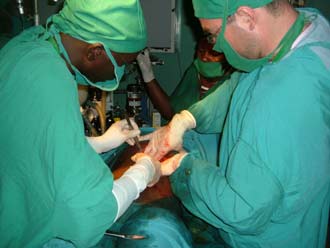
Here are just a few scenarios from one day to illustrate some of the greatest problems:
- The first patient we saw was an 18-year-old woman, but she had died in the overflowing hospital lobby. She came in, alone, with abdominal pain. She died waiting for an X-ray. No other tests had been done. This was within the standard of care there, though it would be unacceptable in the United States.
Most patients with surgical problems in Uganda never even reach a medical facility. Those who do often have an unsalvageable, advanced state of disease for something that would be routinely treatable in the United States at an earlier stage.
Why? It's partly because tests, medications and all bedside care are paid by the patient - although technically, public hospital care is "free." A hospital stay is unaffordable on an average income of 80 cents a day.
- I later supervised two Ugandan medical students suturing a patient's wounds. The students there are an incredibly precious resource. Uganda has four doctors per 100,000 people (average for East Africa), compared with 260 per 100,000 in the United States. The injured man being treated went to a ward with 45 other patients, all cared for by one nurse. Africa is short an estimated 1 million health care workers, and training programs are critically important.
- Later, we saw a 7-year-old girl who had been struck by an auto several days earlier and had not been treated. On arrival, she was barely alive, with a chest full of blood. We struggled to find IV's and blood pressure cuffs, all routinely available here.
Fortunately, we were able to drain the blood, and she improved. Other patients could not have emergency surgery that night because the hospital ran out of blood and oxygen, not an uncommon occurrence.
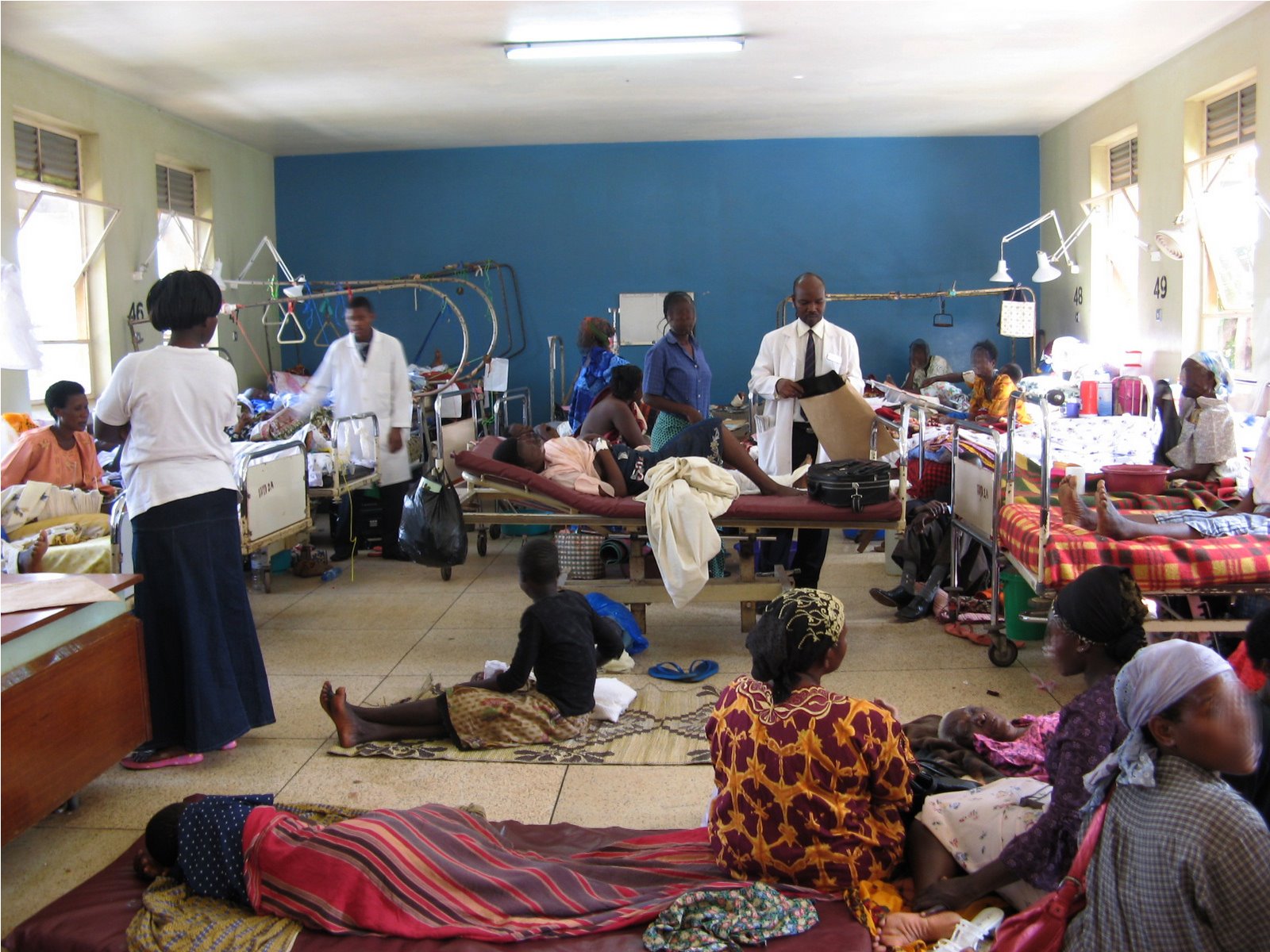
As in most poor countries, Uganda has an epidemic of vehicle crashes with no emergency system or adequate facilities for injured patients. Injuries kill more African children over 5 than HIV, tuberculosis and malaria combined, and 90 percent of injury deaths globally are in low-income countries.
Later that day, I unexpectedly had my own surgical problem. While playing basketball after work, I tore a tendon in my knee. I knew immediately I would need surgery. Unfortunately, the resources to reliably take care of my injury did not exist there. Without the right operation, I would be unable to walk normally again.
Four days later, I was back in San Francisco, and the operation was completed at UCSF. After surgery, I had near one-on-one nursing care, and at my fingertips was a personal flat screen cable TV which probably cost several thousand dollars.
I struggle to see how these worlds co-exist.
Labels: Kampala
posted by Doruk Ozgediz at
12/06/2007
0 Comments


